The End: Surviving the World through Imagined Disasters by Katie Goh. 404 Ink, 2021. Inklings.
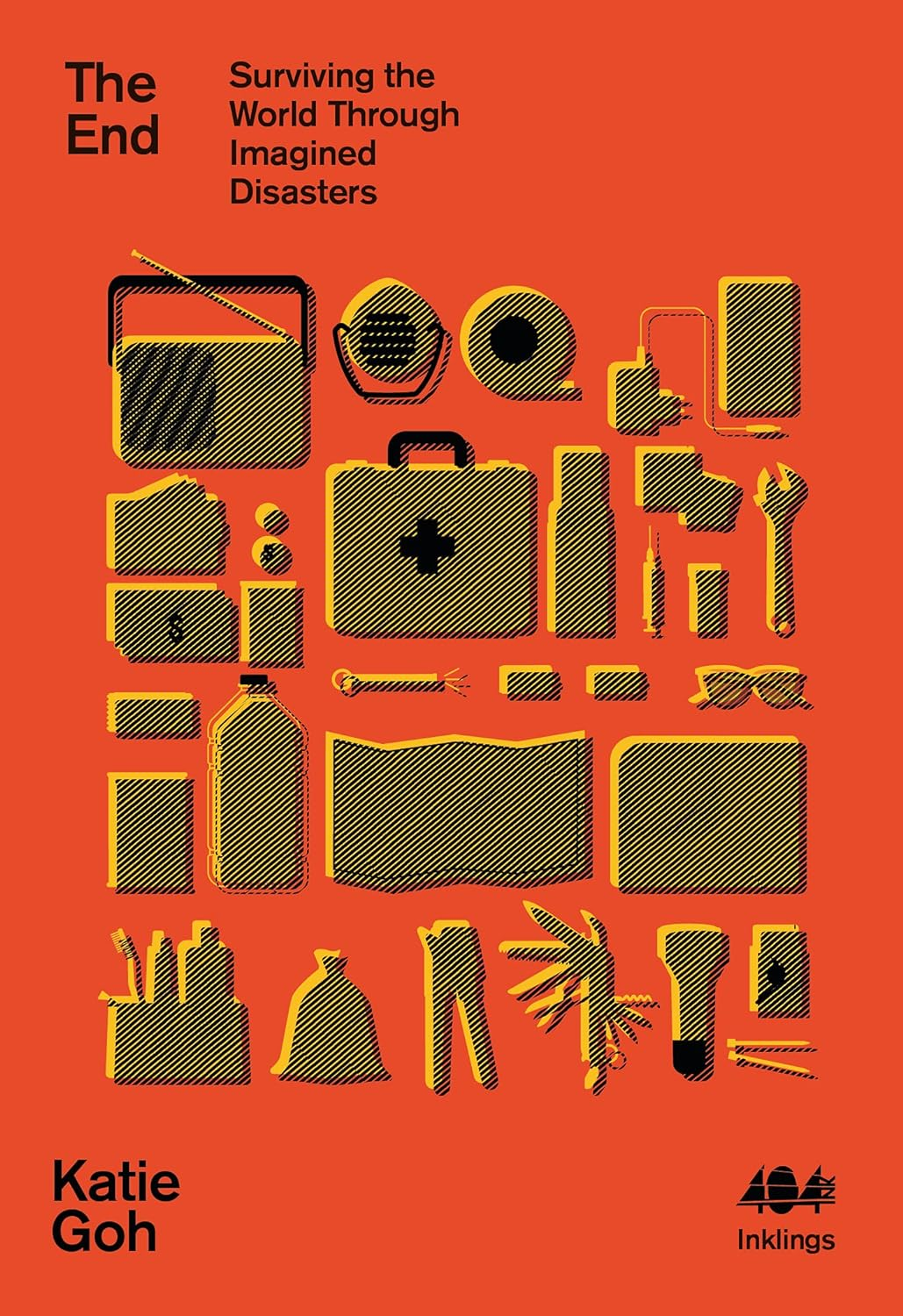
A trade book about sff and why we love it is always welcome. A trade book about sff and its cultural significance, especially what the genre might teach us about ourselves and our world, and that is accessibly written, full of personality, and sharply incisive—that book is needed. Katie Goh, a writer from the north of Ireland, living in Edinburgh, has written just such a book.
The End: Surviving the World through Imagined Disasters is the fifth book in British indie publisher 404ink’s series of short, sleek, politically aware nonfiction “deep dives” into cultural issues and popular interests. The series, Inklings, is only about 3 years old and features books of c. 25,000 words by journalists, academics, writers, and activists on everything from Studio Ghibli to the crises of the neoliberal university. The series calls to mind similar projects like Canadian indie publisher ECW’s Pop Classics, University of Minnesota Press’s Forerunners, or University of Nebraska Press’s Provocations. Given how how many claims there are on our time and energy, both as readers and writers, these shorter, critical works of nonfiction about topics that are politically important and/or socially interesting have an instant appeal. And I think they play an important if not necessary role in our critical landscape, though that manifesto can wait for another time.
Goh’s The End is a remarkable, entertaining little book that asks the question, why do we love watching stuff get destroyed? It’s certainly not a new question and is one that critics have been asking in public venues for decades, perhaps most influentially by Susan Sontag in her 1965 essay “The Imagination of Disaster.” In some ways, there’s nothing new about the answers, especially for American audiences (we like seeing what the end would look like because we’re plagued by XYZ anxieties about our society, culture, political, etc.). But as Goh succinctly and expertly shows, and often with greater verve and clarity than many academics, the historical circumstances of disaster have only come into greater relief in the nearly 60 years since Sontag’s essay, partly through the very fictions and films Goh surveys, and partly because of the greater range of intersecting modes of critique available in public discourse, from ecocriticism and capitalist realism to queerness, feminism, race, postcolonialism, decolonialism, disability, and more. And, as Goh demonstrates, many of these conversations that surged, crested, and receded in the public imagination through various media cycles over the past 30 years came to a head during the COVID-19 pandemic, a truly global experience that saw isolated consumers reaching out to (post-)apocalyptic media in search of comfort.
The End offers four short chapters each focused on a different source of disaster in our media: pandemics, the climate (or, more appropriate, nature), aliens, and society itself (that is, humans). Goh acknowledges that this schema of disasters is porous and uses these disaster sources to inventively juxtapose texts and move out of the trap of reading texts only in the boundaries of their (sub)genres. In the first chapter, for example, we see a realist medical disaster film like Soderbergh’s Contagion (2011) nudge up alongside Ling Ma’s literary apocalypse novel Severance (2018) and George Romero’s zombie film Dawn of the Dead (1978). Goh’s juxtapositions both make sense, in that all the texts are about a pandemic, and are refreshing, in that these texts aren’t often discussed in conversation with each another. Goh draws on frameworks pulled from academic studies of these films, from cultural critics, and from her own idiosyncratic history with the media she writes about to provide a unique set of observations and critiques. Her goal in these chapters is to outline how different kinds of disasters bring into sharp relief various forms of inequality and in doing so teach us a little bit about the way our world is always already trying to kill us.
Goh offers a refreshing, welcome blend of symptomatic and reparative readings that eschew the overly technical language of much theory-heavy sff studies. She engages to a limited extent with scholarship about the texts she discusses, and in doing so keeps up with all the expected positions about post-apocalyptic, disaster, zombie, and other “end of the world” media, but does so in language that moves beyond the academy, reaches out to others who might be wondering why they also love these disastrous scenarios, and offers the occasionally novel insight that scholars would do well to pay attention to.
I won’t make the mistake of saying we should all be writing this way—scholarly and public criticism have their use and places (though I lean toward disrupting to the former by blurring lines with the latter)—but it is refreshing to read someone who is both aware of the conversations academics are having, is interested in communicating those to a broader audience, and is able to extend those insights with unique takes of their own.
Goh’s The End is academic in rigor, creative in style, journalistic in accessibility, and activist in energy. It is arguably “The Imagination of Disaster” for our particular, fucked up moment in time.
To get notifications about new essays like this one sent directly to your inbox, consider subscribing to Genre Fantasies for free:

 Genre Fantasies