The Hittites by Damien Stone. Reaktion Books, 2023. Lost Civilizations.
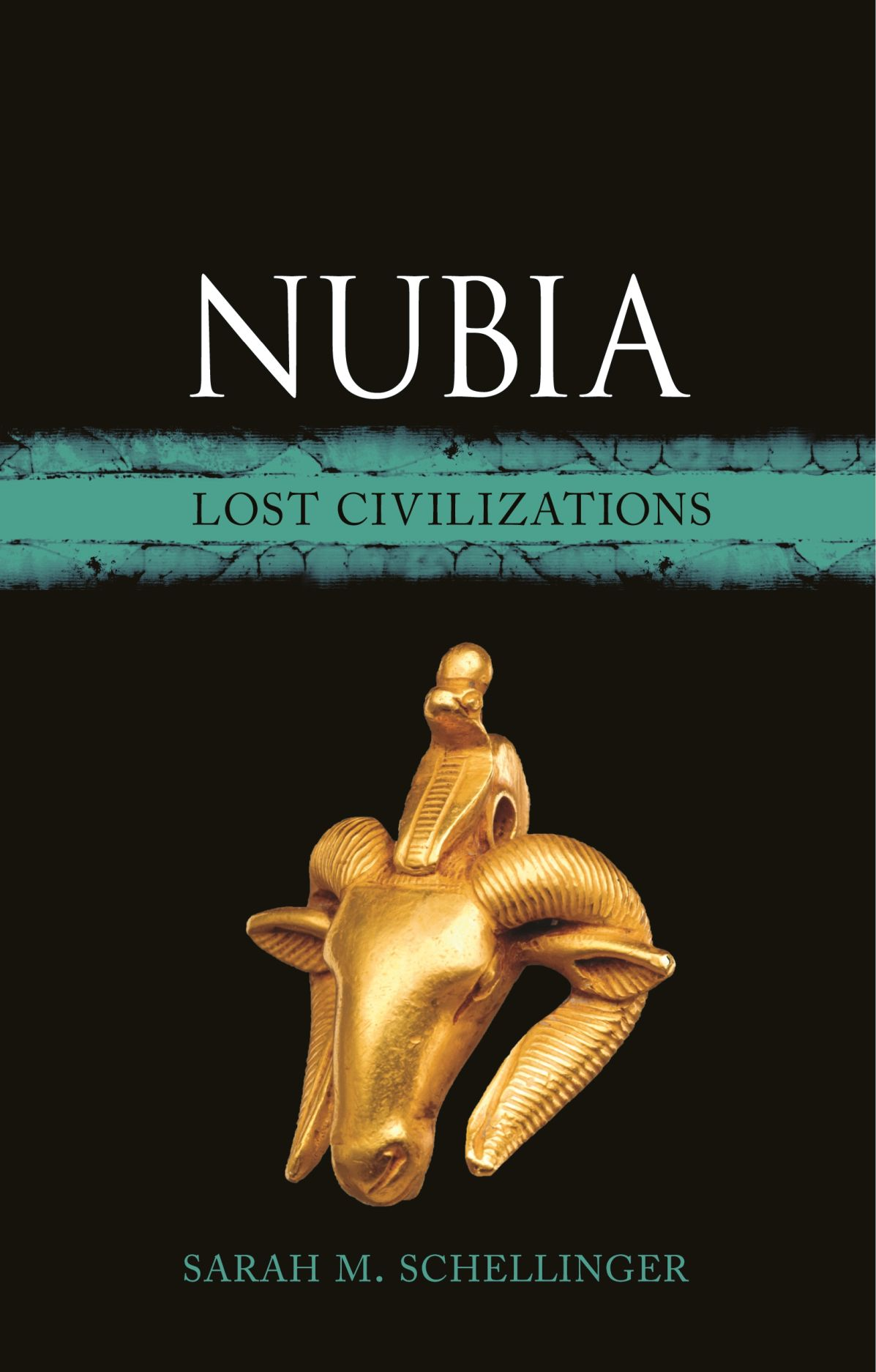
Nubia by Sarah M. Schellinger. Reaktion Books, 2022. Lost Civilizations.

Reaktion’s Lost Civilization Series
Reaktion Books is my second favorite non-university press publisher of trade nonfiction (so I’m setting aside the more scholarly and/or political publishers, like Zone, Zed, Zer0, Pluto, Repeater, PM, AK, Verso, etc.), just after Hurst, who publishes incredible nonfiction on global history and politics, with strong lists in African, Middle Eastern, Eastern European, and Asian studies, though their books are not always well-distributed in the US. Reatkion publishes broadly in cultural studies and history, and has great lists for non-specialist trade audiences in medieval, ancient, folklore, food, literary, media, and cultural studies. They are especially known for their series like Animal, Critical Lives, Earth, Edible, Foods and Nations, and more. In the US, they are distributed by University of Chicago Press and their books are widely and readily available on Amazon, Bookshop, and other e-retailers.
While I’ve read a number of books in their Edible series, my favorite accomplishment of Reaktion’s as a publisher is their series Lost Civilizations. Setting aside the sensational title that sounds straight out of a Doc Savage pulp story or its Indiana Jones rip-offs, and acknowledging that almost none of the civilizations covered in the series are or were “lost,” the series is an incredibly tool for communicating state-of-the-field knowledge from archaeology, history, philology, classics, and other disciplines about the ancient world. Each little volume of circa 200 pages (maybe 50-60k words), in small format, is richly illustrated and seeks to give a general introduction to an ancient culture, civilization, kingdom, or people. By October of this year, the series will have published 16 volumes covering the following ancient peoples and polities: the Indus Valley civilization, Persians, Egyptians, Etruscans, Goths, Greeks, Sumerians, Aztecs, Phoenecians, Inca, Maya, Nubians, Hittites, Korean Three Kingdoms (Silla, Koguryŏ, Paekche), Assyrians, and the “barbarians” that lived at the edges of the Mediterranean world.
I’ve recently read two of these volumes back to back and thought they would make an interesting double-feature essay, less a critical response, since the topics are so far outside my realms of expertise, and more a reflection on what struck me as interesting and valuable in these general introductions. I’ve written this year about the difficulties of short, beginner’s, and big continent-wide histories, and I have to say that from my non-specialist perspective the two volumes—on the Hittites and Nubia—I’m covering today are successful introductory histories that strike the necessary balance of covering a complex topic without under- or overwhelming the reader. They are, in other words, pleasingly whelming histories!
Why Genre Studies Needs to Read (Ancient) History
I also wanted to write about these two books because, while I’m not an ancient historian or Classicist or Indo-Europeanist (I was one or two Greek courses shy of a third major in Classics!), I think the study of ancient history and especially of the rich diversity of ancient history beyond Greece, Rome, Egypt, and China (when people even remember to group it in) is incredibly important to those of us who study and/or care deeply about fantasy and speculative fiction. After all, a great deal of fantasy fiction, horror, and the Gothic are in direct conversation with some version, understanding, or imaginary of history, often ancient and medieval. Having even a cursory familiarity with state-of-the-field knowledge regarding ancient and medieval cultures all over the world helps us be better scholars of these genres, gives us more ways into thinking about the (ab)uses of history and myth.
To take an incredibly prominent but undertheorized example, Sumer and the Sumerian language play a central role in Neal Stephenson’s Snow Crash. Knowing something about Sumer, the (multiple and global) invention of writing, and how languages evolve would really help elucidate Stephenson’s strange and historically/archaeologically/linguistically problematic connection between Sumer and the Biblical Hebraic Tower of Babel myth, as well as his argument that Sumer is the Ur-language of human languages (which, well, laughable); a basic knowledge of Sumer’s contextual role in history would deepen our understanding of Snow Crash and its (ab/mis)uses of history, help us to think through Stephenson’s theoretical claims, and to see how they link up with other claims that draw on (ab/mis)uses of history.
Beyond the critical perspective, a broader familiarity with ancient and medieval—hell, and early modern and modern!—cultures and their diverse, complex, and interconnected histories can only help writers of fantasy, science fiction, horror, and other genres (something the historical fiction and period detective novel writers have long known). I would therefore encourage anyone interested in writing genre fiction to dive into the past through Reaktion’s Lost Civilizations series.
On the Lostness of Civilizations
Before we go to ancient Anatolia and Nubia, I want to take Reatkion’s series title as a premise and quickly propose an incredibly rough schema of (at least) three kinds of “lost” civilizations or cultures. Or, more accurately, a schema for thinking about supposedly “lost” cultures by thinking about the ways “we” “lose” a civilization or culture by virtue of “our” loss or retention of knowledge about them and what we are able to reconstruct.
First, a civilization is so old that too many intervening epistemes have effectively erased all knowledge, even mythic, of the civilization—all that remains is the material culture, including small amounts of art and sculpture that give us only the briefest glimpse into their cultural lifeworlds and ideologies. This is the case with cultures so ancient that they are only discovered as bones and monuments, often much later, by younger cultures. This is the case with nearly every Paleolithic, Neolithic, and Chalcolithic, peoples and many early Bronze age peoples whose cultures are so old that their monuments, cities, ritual sites, and necropolises were buried over by the changing weather and geology of the lands they called home. These are the people that pseudo-archaeologists like Graham Hancock make grand and fantastical theories out of and that a whole genre of historical fantasy—which I call paleofiction—has come into existence to narrate (think, Jean M. Auel’s Earth’s Children novels).
Second, a civilization is not exactly remembered in name and deeds by later cultures or those that take up residence in the region, but, upon rediscovery, has rich material and literary remains that can tell us a great deal about how people lived, what they thought, maybe even what kinds of stories they had, what names they gave themselves, and so on. These are cultures that often left behind written records. Here I am thinking about the Indus Valley Civilization, sometimes abbreviated to IVC, and previously referred to as the Harappan civilization, which sprang up in the Indus Valley over 5000 years ago and left behind over 4000 examples of its writing in the form of the Indus script, which is still undeciphered.
Third, a civilization is remembered—especially in contemporaneous or later sources—but details are scarce, usually because the information comes from outside the culture itself. Often, “we” have “lost” where these civilizations were, exactly, e.g. their cities, have little knowledge of their culture, and may not know anything beyond what third parties said about them in ancient texts. This is especially the case with cultures like the Scythians or other groups deemed “barbarians” by settled peoples across Eurasia. Occasionally, these cultures are rediscovered through archaeological excavations so that we can, in essence, put a face to the name; better yet, sometimes these cultures are rediscovered and they have written records; better still, sometimes those written records can be deciphered. This is the case with the Minoans, the Trojans (at least, we have a good sense that the Troy/Troia/Ilion of the Iliad is a specific archaeological site in Marmara, Türkiye), and the Hittites.
Of course, it should be very clear that constructions of lostness and rhetorics of to/from/by whom they were lost—that is, the “our” and “we” that operates in any discussion of “lost” civilizations and the work that “recovered” them—should always be considered in context, especially when the history of “discovering” lost civilizations is carried out by Western archaeologists in colonized lands. To take the following examples of the Hittites, the Hittites’ ruins were “discovered” in lands that remained consistently populated for thousands of years, and no doubt the local Turks had some thoughts about those ruins, even if Western archaeologists don’t record those thoughts and even if the Turks are, to be sure, a completely different people who entered, settled, and colonized Anatolia c. 2000 years after the disappearance of the Hittites. We have to keep in sharp relief both who is implicated in having “lost” a civilization; the contexts of the loss and the (re)discovery; and the contexts of all that has happened in the intervening centuries or millennia to “lose” a civilization. Foremost, we must be attuned to the political implications and ideological work of rhetorics of lostness in archaeology, history, philology, and historical linguistics .
The Hittites by Damien Stone
Australian archaeologist and museum collections specialist Damien Stone’s The Hittites is a sweeping introduction to a civilization that was “lost” in the third sense of the meaning outlined above, the Hittites having essentially disappeared from written records and their location remaining unknown for nearly 3000 years. The Hittites, or a people called the Hittites, were known to have existed as one of many peoples in the ancient Near East based on scant mentions in the Tanakh (Hebrew Bible), but next to nothing was known about them—not their culture, language, location, what sort of political structures they had, only that they were, in some cases, fierce warriors. In addition to offering a state-of-the-field entry point to understanding the Hittites, Stone also lays out the history of their rediscovery.
In fact, before 1917, when the Hittite language was finally deciphered, Uriah/Uriyya—the first husband of Bathsheba, later King David’s wife and King Solomon’s mother—was the most famous Hittite known by name (setting aside the reality of the Biblical myth). The Tankah mentions “Hittites” (b’nai Chet or Chetiy, children of Chet, transliterated and brought into English as Heth) and considers them a distant relative in the Hebrew genealogy of ancient Near Eastern peoples, which sees everyone as a descendent of someone, in this case, Heth is the son of Canaan, son of Ham, son of Noah; because of this mythic genealogy, the Hitties were also called the Hethites in some Biblical translations. These Hittites, however, may not have been the actual Hittites we know as Hittites today. Many late-19th century Christian European scholars took the Bible as an accurate historical document and, as such, named the civilization they had “discovered” in Anatolia (present day Türkiye and northern Syria) after the Biblical Hittites (who may have actually been what scholars now call the Neo-Hittites, since they spoke a language related to Hittites, called Luwian, and lived in city-states that were many hundreds of years earlier part of the Hittite Empire).
Starting in the 1830s, European explorer-archaeologists began to describe ruins across Anatolia that shared similar architectural features, art, and a hieroglyphic script. Fifty years later Archibald Henry Sayce labeled this culture after the Biblical Hittites and William Wright cemented that association with the publication of The Empire of the Hittites in 1884. Of course, as Stone makes clear, though we retain the term Hittites for the Anatolian Bronze Age empire, they are not the same people as the Biblical Hittites, who may be descended or related peoples of the Iron Age.
The “true” Hittites, and the main topic of Stone’s book, spoke what they called Nesite and, in that language, called their then rain-rich and lushly forested land Hatti, which was dominated by the Maraššantiya river. They ruled from the (currently unlocated) capital of Kuššar before 1650 BCE and then Hattuša (with a brief interlude at Tarhuntašša) for most of the period between the 1650s and the 1180s BCE, at which point their empire collapsed and splintered into smaller city-states amid the wider, slow catastrophe of the late Bronze Age known as the Bronze Age Collapse, which also led to the collapse of the Mycenaean, Minoan, and Babylonian civilizations and had major systemic effects on the Egyptians, Phoenecians, and Assyrians. (Keep in mind that “collapse” typically refers to the sometimes decades-long breakdown of centralized power structures that unified a polity across vast spaces; cultures and peoples lived on, often in the form of distinct city-states and more regionalized cultures.) Like many large polities of the period, the Hittites were not ethnically and culturally monolithic,
but rather a cultural conglomerate formed from an intermingling of peoples. In addition to the ruling dynasty who spoke the Hittite/Nesite language, Hatti was inhabited by other racial [i.e. cultural/ethnic] groups of Anatolian, Mesopotamian, and Syrian origin (34).
Though Hittites had been “discovered” and named as such by the 1880s, it was not until 1917 and the work of Czech philologist Bedřich Hrozný that the Hittite language—recorded in thousands of clay tablets using both cuneiform and Luwian hieroglyphics—was deciphered that the considerable literary culture of the Hittites became readable. What’s more, Hrozný’s decipherment revealed that Hittite was an Indo-European language and this proved crucial to our understanding of the historical development of the Indo-European language family (similar to the later discovery of Tocharian, which died out in the late 9th century in the Tarim Basin). In time, the ability to read Hittite revealed a parcel of other related languages, sometimes preserved in Hittite texts, now considered part of the Anatolian subfamily of Indo-European. These languages were often spoken in city-states that warred against or were successors to the Hittite empire and include Luwian, Carian, Milyan, Lycian, Sidetic, Pisidian, Palaic, Lydian; a new related language, Kalašma, was discovered in 2023. It seems clear that Hittite, Luwian, and other languages developed out of the migration of Proto-Anatolian speakers into the region prior to c. 2000 BCE.
Stone’s book is really a great general introduction to the Hittites for anyone with only a passing familiarity with ancient history. He provides the framework for everything you need to know and offers a compelling amount of detail that brings to life Anatolia under the Hittites without being overwhelming. At just over 200 pages, The Hittites is divided into 8 short chapters that offer overviews of how the Hittites were un-lost; their political and military history; relations with other civilizations of the late Bronze Age; major cities and region; art and material culture; religious and mythological systems; social structures and the role of the law (i.e. the records we use to learn about the Hittites); and the “collapse” of the Hittites into various city-states that themselves disappeared into the more successful polities of Iron Age history.
The stories Stone tells about a people most readers have never heard of are fascinating and they emerge almost as characters of an ancient epic. Of particular interest are Labarna, first king of the Hittites, and his queen Twananna, whose reigns were well-documented in both Hittite and non-Hittite texts, as well as the sickly Hattušili III and his queen Puduhepa, who often ruled in his stead at a time when few women held significant power. Stone also details the mythology of the Hittite, which was both particular to them (and will has elements familiar from Greek, Hindu, and other ancient Indo-European societies) and also syncretic: the Hittites—who “referred to their realm as a land of ‘a thousand gods’”—hedged their bets and took in all the deities of the peoples they ruled, figuring that the more heavenly figures on their side, the better off the empire was. Stone gives the names of multiple Hittite texts, like The Kingship of Heaven and the Song of Ullikummi—these about an agricultural god named Kumarbi, his son Teshub, and the giant Ullikummi—or the stories of Illuyanka—about a dragon—which might prove interesting for readers, since they demonstrate the great diversity of ancient beliefs beyond the Greek and Roman pantheons. Throughout the book, Stone also points to the ways Hittitologists get their information, how and why they make certain assumptions, and what the limitations of current knowledge are.
In short, Stone’s The Hittites is a book well worth anyone’s time who wants to get a glimpse of an ancient society in all its fullness and humanity. It’s a masterclass in how to use the short/brief history genre effectively to leave the reader with a sense of familiarity without being overwhelming.
Nubia by Sarah M. Schellinger
Archaeologist, Egyptologist, and Nubianist Sarah M. Schellinger’s The Nubians is a similarly effective introduction to an ancient people that are little known in the culture (outside of Afrocentrists, who have made the Nubians central to their alternative histories) but had a significant and very long history.
Unlike the Hittites, the Nubians were never really a lost civilization—that they were there was always known, and known consistently throughout history, since they never stopped being there. But, as Schellinger points out, what we know about the Nubians was mostly known from an external perspective, through records left by the Egyptians, Greeks, Romans, and Arabs. The fact that we refer to them as Nubians makes this pretty clear, since the term Nubia referred to a region of the upper Nile populated by peoples who did not likely called themselves Nubians and who, over the millennia of their existence, which we characterize collectively as “the Nubians,” had different political and social lives, though there remained, as Schellinger traces, key threads of cultural continuity across the millennia. Archeology and textual studies of more recently discovered records written in Meroitic and Old Nubian scripts have changed the orientation of ancient Nubian studies significantly, but much of the written knowledge about ancient Nubia, that is of Nubia in the Bronze and Iron Ages, of polities such as Napata, Meroë, Kerma, and Kush (the 25th dynasty of Egypt, which saw conquering Nubians hold the position of pharaoh in Egypt for nearly a century) still comes from ancient Egyptian texts. As a result, Schellinger suggests that Nubia was lost in the sense that its importance “as a society that helped develop and build the region of northeastern Africa into an ancient world power” is little known.
The history of ancient Nubia, which spans the same thousands of years when the Egyptians were active to the north, is understandably complicated both because it is so long and because of our limited ways of gaining information about it. Unlike the Hittites, who left behind considerable records and did so in ways that reveal to us much about both the elites and common folk, the Nubians did not leave nearly so many texts and when they did, they are often only those of the elites. There are also just fewer Nubian texts, so the great majority of information about ancient Nubia and its successive polities comes largely from material culture—that is, we mostly learn about Nubia through archaeology and the reading of physical remains, architecture, burials, pottery, art, etc. Stuff that gets dug up.
Nubia, as a term, may derive from the Egyptian word nebu, or gold, since Nubia was indeed rich in gold. But the Egyptians did not use this term and referred to Nubia as Ta-sety (“Land of the Bow” after the Nubians’ feared archers), coinciding with the period referred to as Kerma (c. 2500–1450 BCE) and during which Egypt’s New Kingdom colonized Nubia (c. 1550–1070 BCE), and later Kush, which is often used today to refer to the kingdoms of Napata (c. 800–300 BCE) and Meroë (c. 300 BCE–350 AD). It was at the start of the Napatan period that the Nubian king Piye invaded Egypt, then in its Third Intermediate Period (a time when the country was split regionally between multiple kinglets and three separate dynasties), and founded the 25th dynasty that ruled Egypt and Nubia briefly as twin kingdoms before the Egyptians reasserted control in the 650s BCE. Throughout their history, the Nubians retained their own cultural, religious, and linguistic identity, while trading, politicking, and warring with Egypt and incorporating significant aspects of Egyptian art, architecture, and religion into their societies.
Schellinger’s book is structured somewhat differently to Stone’s, in large part because Schellinger’s topic is significantly larger in scope given the thousands of years of Nubian history that archaeologists have uncovered. Schellinger thus follows a roughly chronological history of Nubia. The first chapter introduces Nubia, its lostness, and the question of sources, while also providing a great and helpful overview of the major periods of Nubian history, its interrelations with Egypt, and the geography of the region. Chapter two provides the paleoanthropological history of people in Nubian and their transition from nomads into a settled society that interacted regularly with Egyptian rulers even as early as 6000 years ago. Schellinger then provides an overview of the 3000-year relationship between the “frenemies” Nubia and Egypt from the Old Kingdom, through the New Kingdom colonization of Nubia, to the “Egyptian abandonment” of Nubia c. 1070 as Egypt entered the Third Intermediate Period of internal turmoil. This chapter also discusses the reverse flow of Nubians into Egypt and the sources and evidence of their lives up north. Chapter 4 described the 25th dynasty of Egypt, i.e. the Napatan rule of one of the most powerful empires in the ancient world. Chapter 5 transitions to a brief discussion of what we know about Nubian religion, which like many ancient belief systems was polytheistic and syncretic, and of special interest because of the way the Nubians integrated Egyptian beliefs into their own robust pantheon—which also had implications for Nubian kingship. The final three chapters chart the later history of Nubia from Meroë and its relationship to Ptolemaic and later Roman Egypt through the coming of Christianity (Nubia was once heavily Christian, like Ethiopia remains), the coming of Islam, and the transition to modernity.
In some ways, Schellinger’s book feels like “full” in its account of Nubia than Stone’s does of the Hittites, but I think this is a knee-jerk reaction that results largely from the very different time scales involved and the significantly different sources used to understand both civilizations. What Schellinger ultimately does is provide a clear picture of how can understand a region and a culture that has maintained continuity, but also changed drastically, over the course of 6000 years and more.
Nubia is an important book for decentering Egypt and dispelling the myth of its uniqueness in the story of the ancient world. Egypt was never alone, it was always one of many civilizations interacting at the meeting of northeast Africa, western Asia, and the eastern Mediterranean. Nubia played a major role in that story and had its own story to tell, too. Moreover, what Schellinger’s book shows us is that our conception of civilizations on the timescale of Egypt and Nubia has to necessarily understand them as both continuous and fractured—that is, the Egypt of the Old Kingdom was not the Egypt of the New Kingdom; the Nubia of Kerma was not the Nubia of Meroë or of the Christian kingdom of Makuria—though they are all, in some sense, Nubian. What this book also makes clear is that any political claims we might make on the past require that we see the past for what it was: always much more complex, and interesting, than what those political narratives offer.
To get notifications about new essays like this one sent directly to your inbox, consider subscribing to Genre Fantasies for free:
Further Reading
Below are some suggested readings if you want to dive deeper into the histories of either culture and their historical surrounds, in order of suggestion based on ease of entry, specificity, and general reader accessibility of the project.
On the Hittites
Podany, Amanda H. Weavers, Scribes, and Kings: A New History of the Ancient Near East. Oxford UP, 2022.
Cline, Eric H. 1177 B.C.: The Year Civilization Collapsed. Princeton UP, 2021.
—. After 1177 B.C.: The Survival of Civilizations. Princeton UP, 2024.
Bryce, Trevor. Warriors of Anatolia: A Concise History of the Hittites. I.B. Tauris, 2019.
—. Life and Society in the Hittite World. Oxford UP, 2002.
Lehmann, Johannes. The Hittites: People of a Thousand Gods. Viking, 1977.
Hoffner, Harry A. Hittite Myths, 2nd ed. Society of Biblical Literature, 1998.
Bachvarova, Mary R. From Hittite to Homer: The Anatolian Background of Ancient Greek Epic. Cambridge UP, 2016.
On the Nubians
Ehret, Christopher. Ancient Africa: A Global History, to 300 CE. Princeton UP, 2023.
Parker, John, ed. Great Kingdoms of Africa. U of California P, 2023.
Wilkinson, Toby. The Rise and Fall of Ancient Egypt. Random House, 2011.
Bonnet, Charles. The Black Kingdom of the Nile. Harvard UP, 2019.
Bianchi, Robert Steven. Daily Life of the Nubians. Greenwood, 2004.
Dodson, Aidan. The Nubian Pharaohs of Egypt: Their Lives and Afterlives. American U in Cairo P, 2023.
Smith, Stuart Tyson. Wretched Kush: Ethnic Identities and Boundaries in Egypt’s Nubian Empire. Routledge, 2003.
Edwards, David N. The Nubian Past: An Archaeology of the Sudan. Routledge, 2004.

 Genre Fantasies